
Your cart (0)
Your cart is empty
Tax included and shipping calculated at checkout
Your cart is empty
Tax included and shipping calculated at checkout

Last Updated: October 17, 2026
Yes, metal spikes can damage golf greens, but the story is more subtle than the old ban-the-spikes argument suggests. A golfer who walks normally in steel spikes leaves shallow marks that heal fast. A golfer who drags their feet, pivots hard, or wears worn spikes can scar the putting surface badly. This guide breaks down what metal spikes actually do, how they compare with soft spikes and spikeless shoes, and how to protect the turf either way.
The short answer most golfers want: modern course policy, not turf science, is why you rarely see metal spikes on greens today.
Here's the part most guides get wrong. The damage question has two halves. One half is the shoe. The other half is the player wearing it. Course superintendents have long known that foot traffic, not spike material alone, drives most surface wear. The USGA Green Section guidance on putting green wear treats concentrated traffic and dragging feet as the main culprits behind worn turf.
The key difference between metal and soft spikes is how far each one pushes into the turf. Steel spikes are thin and sharp. They penetrate the top layer of the green and leave small puncture marks. Soft spikes are wider and made of plastic or rubber. They spread the load and grip more gently.
So which one is worse for the green? It depends on the golfer:
A common mistake is assuming soft spikes are automatically safe. They aren't. A worn soft spike with a jagged edge can gouge the surface just as badly as steel.
Spikeless shoes are the third option, and they change the smoothness equation. A spikeless shoe uses a rubber outsole with molded traction instead of removable cleats. Nothing sharp touches the turf, so the risk of spike marks drops sharply. The trade-off is grip, especially on wet mornings or sloping lies.
Green smoothness suffers most when players twist and pivot in place. That's true for all three shoe types. A spikeless shoe that slips can cause a golfer to scuff the surface while recovering balance.
Here's how the options stack up for green condition:
| Shoe type | Turf impact | Grip level | Best for |
|---|---|---|---|
| Metal spikes | High if feet drag | Highest | Firm, dry conditions |
| Soft spikes | Low when new | Good | Most everyday play |
| Spikeless shoes | Lowest | Moderate | Dry, flat courses |
Our honest take: for the average recreational golfer, soft spikes or spikeless shoes make more sense. Metal spikes only pay off if you play firm, fast courses and walk with care.
Surface wear on a putting green comes mostly from repeated traffic and poor foot habits, not from the spike itself. Superintendents see the same patterns year after year. The damage clusters where players walk the same line to the hole, and where they drag their feet without lifting them.
The biggest offender is dragging feet. A golfer who shuffles across the green in steel spikes leaves a trail of scuff marks. The same golfer in soft spikes leaves far less. So the fix is often about how you walk, not what you wear.
Watch for these habits:
Most golf courses today do not allow metal spikes, and many have formal footwear rules in place. The shift away from steel spikes started decades ago, driven by concerns about green damage and clubhouse floors. Many courses now require soft spikes or spikeless shoes as a condition of play.
But rules vary more than most golfers assume, and the variation is where the real answer lives. A useful way to think about it is that footwear policy is set at three levels:
What do exceptions actually look like? A few patterns come up:
How should a golfer check before arriving? A simple three-step routine works:
The safest approach is simple. Carry soft spikes or spikeless shoes as your default, and confirm the course policy before you travel. If you're unsure, assume soft spikes are required, you'll almost never be turned away for wearing them.
Spike marks are shallow indentations left by shoe cleats, and most repair in seconds with the right tool and a light touch. The goal is to fluff the turf back up, not to dig it out.
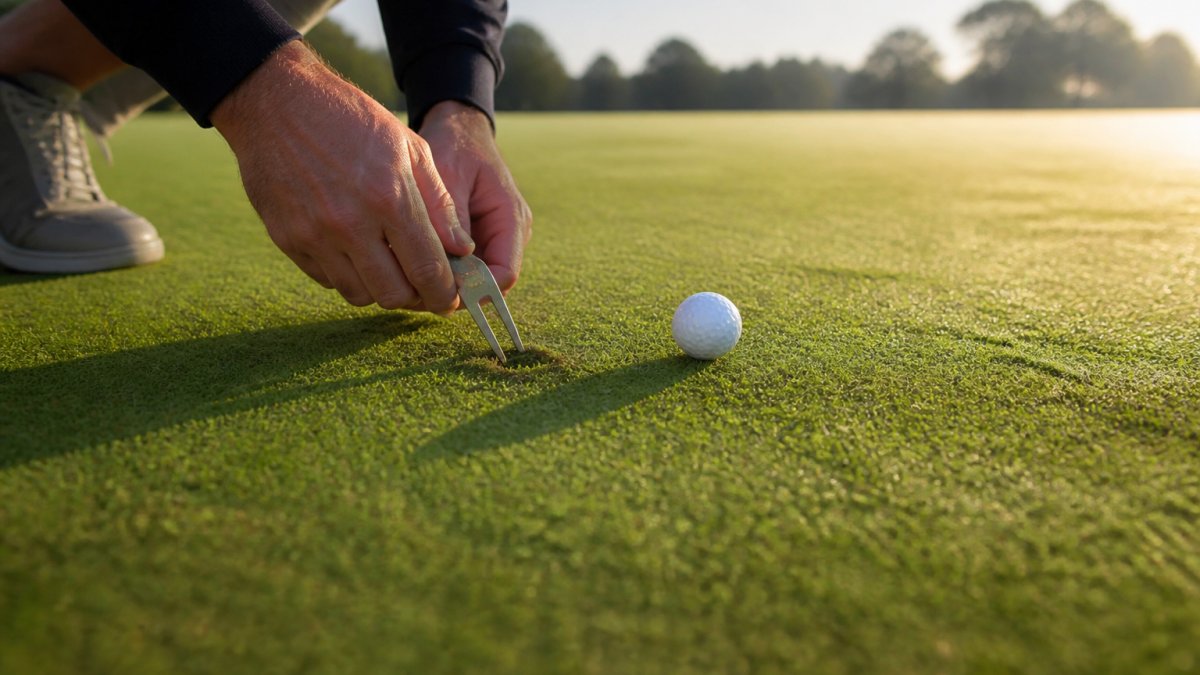
Before you repair anything, make sure you're fixing the right problem. Not every blemish on a green is a spike mark, and treating the wrong damage can make it worse. Here's how the common surface issues differ:
If the mark is a shallow indentation in a trail, it's almost certainly a spike mark. If it's a crater with raised edges, it's a ball mark and needs a different repair motion.
Here's the method we recommend for spike marks:
A common mistake is prying too hard and lifting a chunk of turf. That turns a small mark into a real scar. Light, upward strokes work best.
This is exactly where an all-in-one tool earns its place. The Divot King accessory fits most putters and uses its spikes to aerate the soil and fluff the green back into shape after a ball mark. You repair the surface without digging through your pockets for a separate tool.
Cleat maintenance is the easiest way to reduce green damage, and most golfers skip it entirely. Worn or damaged spikes tear turf instead of gripping it. A quick inspection every few rounds keeps your shoes working with the green, not against it.
Run through this checklist:
Replace spikes as soon as they lose their edge. Loose or damaged cleats are the hidden cause of many scuff marks, and swapping them is a five-minute job.
Protecting greens comes down to small habits: walk with care, maintain your cleats, and repair marks the right way. Metal spikes can damage golf greens, but the bigger factors are dragging feet and worn spikes, whatever shoe you wear. Divot King was built by golfers to make that care effortless. Our all-in-one putter accessory gives you a built-in magnetic ball mark, a universal sleeve adapter that fits most putters, a protective click-on cover for your bag, and spikes that fluff the green back into shape. GET MINE
Metal spikes can mark and scar putting surfaces, especially when a player drags their feet or twists on the spot. The damage is usually shallow scuffing rather than deep gouging, but it still affects green smoothness. Modern soft spikes and spikeless shoes spread pressure across a wider area, which reduces the concentration of force on the turf. Course conditions matter too: wet greens are far more vulnerable to scarring than firm, dry ones, which is why many courses restrict metal spikes during soft weather.
Most golf courses now ban metal spikes, and the ban is usually written into the club's footwear rules rather than local law. Private clubs and tournament venues are the strictest, often requiring soft spikes or spikeless shoes at the gate. Some courses allow metal spikes in dry summer conditions and restrict them after rain. Check the course policy before you travel, and carry a spare pair of soft-spiked shoes if you are unsure.
Soft spikes are better for greens in most conditions because they distribute weight across a wider surface and leave shallower marks. Metal spikes concentrate force into a small point, which scars turf more easily when a player turns or drags. That said, worn or damaged soft spikes can be just as harmful: a broken plastic cleat with a sharp edge will scuff a green. Inspect and replace your replacement spikes regularly, whatever type you wear.
Repair the mark before you leave the green. Use a divot repair tool or the prongs on a putter accessory to lift the turf around the edges and press it back level, working from the outside in. Do not pry upward, which tears roots. If the mark is a shallow scuff from dragging feet, a light press with a tool and a tap of the putter sole is usually enough. Report deeper damage to the greenkeeper so it can be treated before it spreads.